

.jpg)
Aspidistra, commonly known as the Cast Iron Plant, is a favorite among plant enthusiasts due to its resilience and low-maintenance care requirements. Native to East Asia, this hardy plant can thrive in conditions where many others struggle, making it an excellent choice for both beginners and seasoned gardeners.
In this article, we’ll explore everything you need to know to successfully grow and care for Aspidistra.
Why Choose the Aspidistra (Cast Iron Plant)?
Aspidistra is well-known for its ability to withstand neglect, low light, and fluctuating temperatures. This makes it an ideal plant for homes, offices, and shaded garden areas. Key benefits include:
- Tolerates low light conditions
- Requires minimal watering
- Resistant to pests and diseases
- Can survive temperature fluctuations
- Long-lived and slow-growing
.jpg)
.jpg)
Ideal Growing Conditions for Aspidistra
While Aspidistra is known for its adaptability, providing the right conditions will ensure it thrives.
- Light Requirements
Aspidistra prefers low to medium indirect light. It can tolerate deep shade, making it an excellent choice for dimly lit rooms or shaded outdoor spaces. However, avoid direct sunlight, as it can scorch the leaves.
- Temperature & Humidity
Aspidistra is remarkably cold-tolerant for a tropical-looking plant and can withstand temperatures around -10°C to -15°C for short periods when established outdoors in a sheltered location. Prolonged freezing temperatures can cause leaf damage and may affect the roots, especially in containers.
- Soil Requirements
A well-draining potting mix is essential for Aspidistra. A mix containing peat, perlite, and compost works well. If planting outdoors, choose soil with good drainage to prevent root rot.
- Watering Requirements
Aspidistra prefers to dry out slightly between waterings. Water deeply but infrequently—typically once every 10–14 days indoors, or when the top inch of soil feels dry. Avoid overwatering, as this can lead to root rot.
- Fertilizing Aspidistra
Fertilize sparingly. Use a balanced liquid fertilizer diluted to half strength every 4–6 weeks during the growing season (spring and summer). Reduce feeding in the fall and winter.
.jpg)
.jpg)
.jpg)
Planting and Repotting Aspidistra
Aspidistra is a slow grower and does not require frequent repotting. Repot only when the plant outgrows its container, typically every 3–4 years. Choose a pot that is slightly larger than the current one and refresh the soil to provide nutrients.
Common Aspidistra Problems & Troubleshooting
Although Aspidistra is tough, it can experience some issues if not cared for properly.
- Yellow Aspidistra Leaves
Usually a sign of overwatering. Allow the soil to dry out more between waterings.
- Brown Leaf Tips
Can be caused by low humidity, excessive fertilizer, or underwatering.
- Pests and Diseases
While rare, spider mites or scale insects may occasionally appear. Wipe the leaves with a damp cloth or use insecticidal soap if needed.
How to Propagate Aspidistra
Aspidistra can be propagated through division. The best time to divide is during repotting:
- Gently remove the plant from its pot.
- Use a sharp, clean knife to divide the rhizomes, ensuring each section has at least a few leaves.
- Replant in fresh soil and water lightly.
- Keep the new plants in a shaded area while they establish roots.
Aspidistra Varieties
Aspidistra is best known for its classic green foliage, but there are many beautiful and unusual varieties with distinctive leaf colors, patterns, and variegation. This makes Aspidistra an excellent choice not only for beginners, but also for collectors looking for unique foliage plants.
Aspidistra elatior
Aspidistra elatior is the classic Cast Iron Plant and one of the most reliable varieties to grow. Its long, dark green leaves form a dense, elegant clump and tolerate low-light conditions remarkably well. It is an excellent choice for indoor growing and shaded outdoor areas.
Aspidistra Milky Way
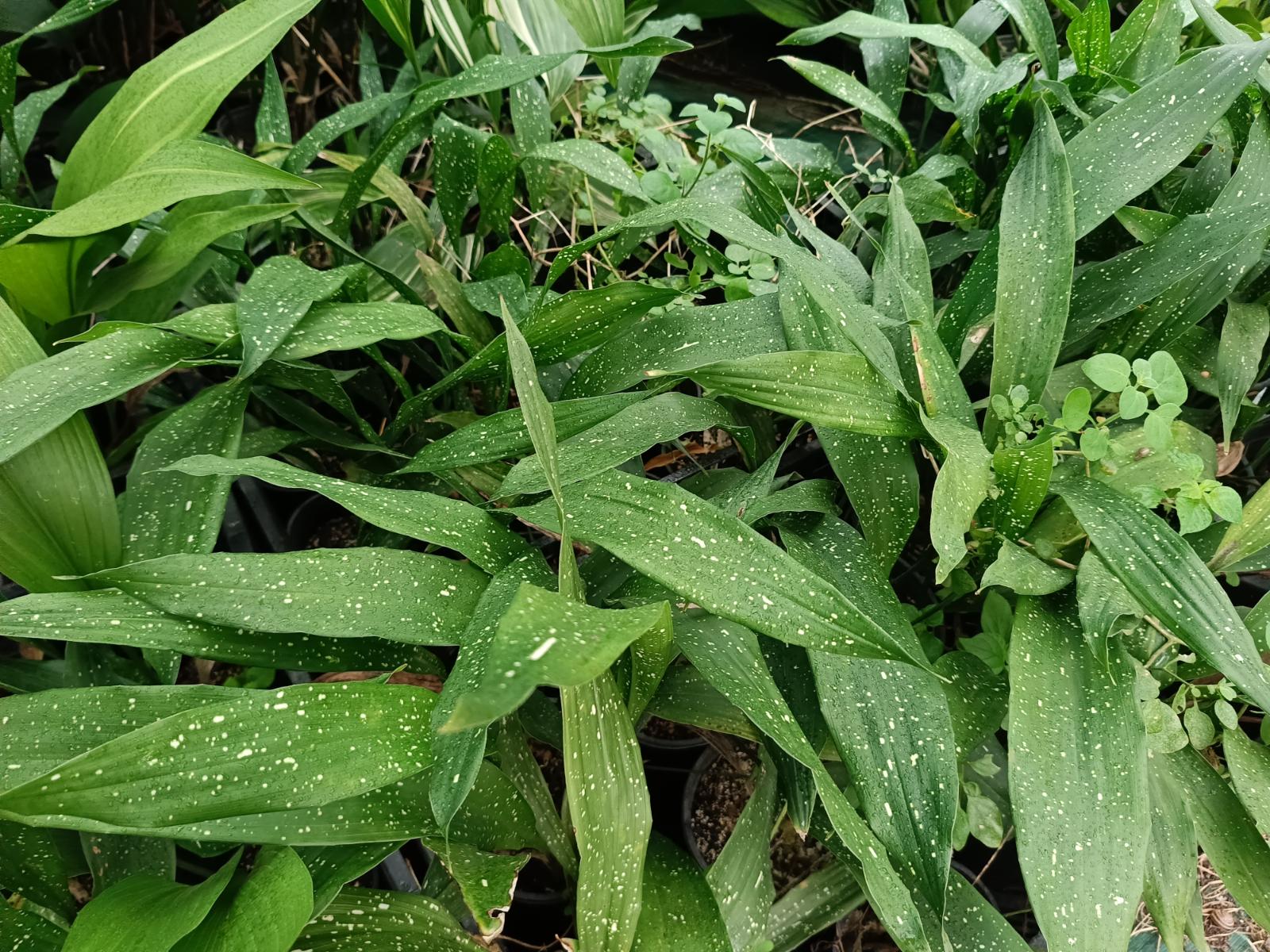
Aspidistra 'Milky Way' is a striking collector's variety known for its dark green leaves covered with numerous small, pale spots. The distinctive pattern creates an effect reminiscent of a starry night sky, making it particularly attractive to foliage plant collectors.
Aspidistra Asahi
Aspidistra 'Asahi' is a highly sought-after variety known for its striking variegation. Mature leaves can develop attractive pale or creamy sections that contrast beautifully with the darker green portions of the foliage. Its unusual appearance makes it a popular choice among Aspidistra collectors.
Aspidistra Hoshi Zora
Aspidistra 'Hoshi Zora' is a distinctive Japanese cultivar appreciated for its dark green foliage decorated with numerous light-colored spots. The name evokes a "starry sky," which perfectly reflects the characteristic appearance of its leaves.
Aspidistra Akebono
Aspidistra 'Akebono' is a beautiful variegated cultivar with attractive lighter markings across its foliage. Its elegant coloration makes it an interesting choice for collectors who appreciate unusual and decorative Aspidistra varieties.
Aspidistra Stars and Stripes
Aspidistra 'Stars and Stripes' is a distinctive variegated variety characterized by contrasting markings and stripes across its elongated leaves. The combination of dark green foliage and lighter patterns gives this cultivar a particularly decorative appearance.
Variegated Aspidistra
Variegated Aspidistra varieties are especially appreciated for their decorative foliage. Depending on the cultivar, leaves can display cream, yellow, white, or lighter green stripes, spots, or sections against a darker green background. Bright, indirect light can help maintain attractive coloration, while intense direct sunlight should generally be avoided.
Rare and Collector Aspidistra
Beyond the classic green form, Aspidistra offers an impressive selection of unusual cultivars with distinctive foliage patterns. Their relatively slow growth and unique appearance make them particularly interesting for specialist plant collections.
When choosing an Aspidistra, consider both the appearance of the foliage and the growing conditions available in your home or garden. All varieties benefit from well-draining soil, appropriate watering, and protection from intense direct sunlight.
Explore our collection of Aspidistra plants to discover different green, spotted, striped, and variegated varieties for your indoor or shaded garden collection.
Conclusion
Aspidistra is the perfect plant for those looking for an elegant yet low-maintenance addition to their indoor or outdoor space. With minimal care and attention, it can provide lush greenery for years to come. Whether you’re a seasoned plant lover or a beginner, the Cast Iron Plant is a reliable and rewarding choice. Happy growing!


